
Crime Scene Cleaning Services in Canada: A Technical, Regulatory, and Professional Overview
Crime scene cleaning services in Canada occupy a critical position at the intersection of public health, environmental safety, and trauma recovery. Unlike standard cleaning or janitorial services, crime scene cleaning involves the controlled removal, treatment, and disposal of biological and chemical hazards that pose serious risks to human health and the built environment. These services are required following events such as violent crimes, unattended deaths, suicides, industrial accidents, and other traumatic incidents involving blood, bodily fluids, or tissue.
This article provides a high-level technical examination of crime scene cleaning services in Canada, including regulatory frameworks, contamination science, professional methodologies, equipment standards, and ethical responsibilities. It also concludes with recommended biohazard cleaning companies operating in Canada, selected based on service scope, professionalism, and compliance practices.
1. What Crime Scene Cleaning Really Involves
Crime scene cleaning—often referred to as biohazard remediation or forensic cleaning—is not concerned with investigation or evidence collection. That responsibility lies with law enforcement and forensic specialists. Once a scene has been released by authorities, crime scene cleaners are engaged to restore the environment to a safe and sanitary condition.
The work involves far more than surface cleaning. Blood and bodily fluids can migrate into porous materials such as carpets, underlay, wood, drywall, insulation, and even concrete microfractures. If not properly removed and treated, these contaminants can harbour pathogens, generate persistent odours, and present long-term health hazards.and you can call on +44 7506 709450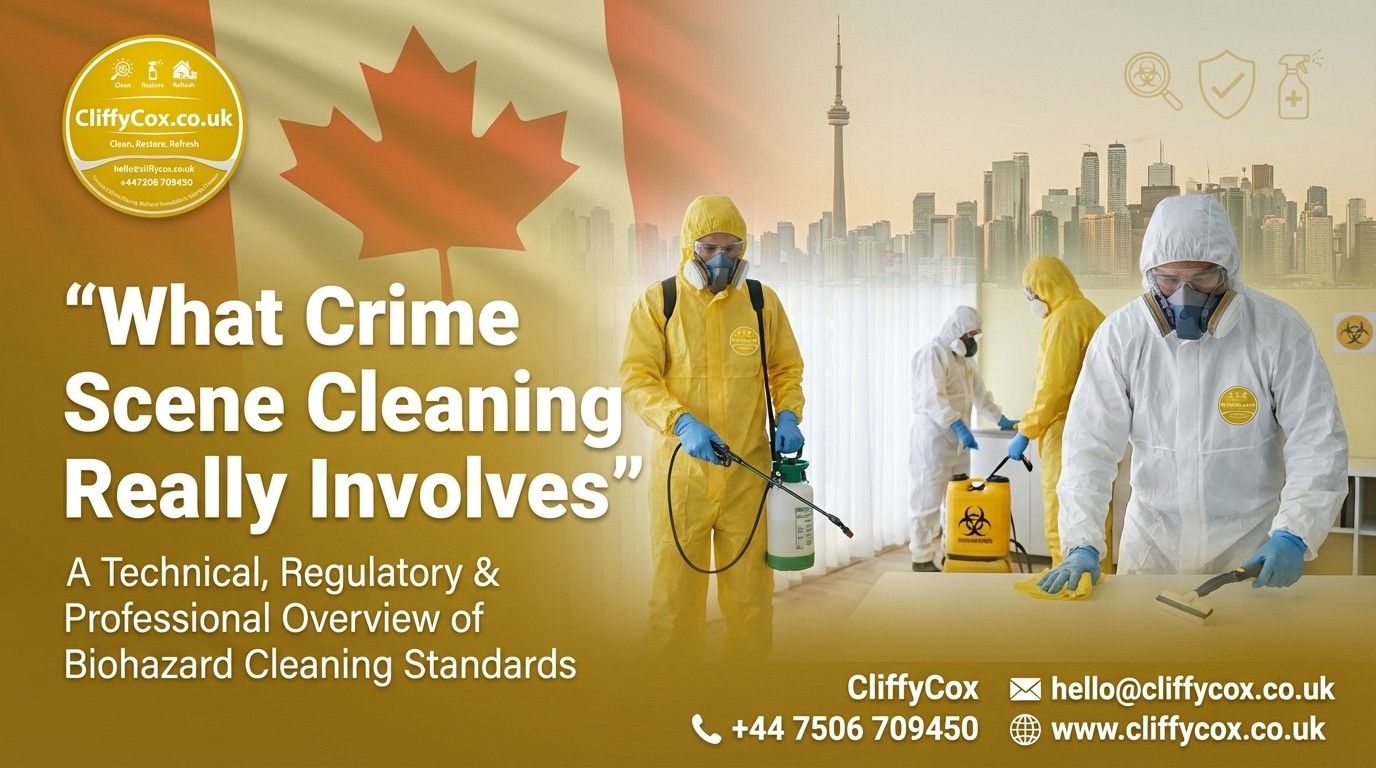
2. Types of Biohazards Encountered at Crime Scenes
Crime scene cleaners in Canada are trained to manage a wide range of hazardous materials, including:
Human blood and bloodborne pathogens
Bodily fluids such as urine, faeces, vomit, and saliva
Decomposition fluids and gases
Tissue and organic matter
Sharps (needles, blades, broken glass)
Chemical residues (pepper spray, tear gas, fingerprint powders)
Pathogens such as Hepatitis B, Hepatitis C, HIV, MRSA, and other bacteria
Each type of contamination requires a specific treatment strategy, disinfectant selection, and disposal method.
3. Canadian Regulatory and Legal Framework
Crime scene cleaning in Canada is governed by multiple layers of regulation. While there is no single national “crime scene cleaning licence,” professional companies must comply with several overlapping frameworks.
Occupational Health and Safety
Each province enforces occupational health and safety legislation that governs:
Worker exposure to biological hazards
Mandatory use of personal protective equipment (PPE)
Training in bloodborne pathogen handling
Hazard communication and incident reporting
Environmental and Waste Regulations
Biohazardous waste must be:
Segregated and labelled correctly
Transported by licensed carriers
Disposed of at approved biomedical waste facilities
Improper disposal is a serious offence and can result in fines or prosecution.
Chemical and Disinfectant Compliance
Disinfectants and antimicrobial agents used in Canada must meet federal safety requirements. Professional cleaners typically use hospital-grade or laboratory-grade products validated for pathogen neutralisation.
4. Technical Crime Scene Cleaning Process
Professional crime scene cleaning follows a structured, technical workflow designed to ensure safety, containment, and complete decontamination.
Step 1: Risk Assessment and Scene Evaluation
Technicians assess:
Type and volume of contamination
Materials affected (porous vs non-porous)
Airborne risk potential
Structural penetration
This assessment determines the scope of work, equipment requirements, and waste volumes.
Step 2: Containment and Zoning
The scene is divided into:
Hot zones (contaminated areas)
Warm zones (transition areas)
Cold zones (clean areas)
Containment barriers and controlled airflow prevent cross-contamination.
Step 3: Personal Protective Equipment (PPE)
Technicians wear:
Full-body protective suits
Respiratory protection (P100 or equivalent)
Chemical-resistant gloves
Eye and face protection
PPE selection is based on hazard level and exposure duration.
Step 4: Removal of Contaminated Materials
Items that cannot be safely decontaminated—such as carpets, mattresses, furniture, or drywall—are carefully removed, sealed, and prepared for regulated disposal.
Step 5: Cleaning and Disinfection
Surfaces are cleaned using:
Mechanical agitation
Enzymatic cleaners
Broad-spectrum disinfectants
Steam or heat treatment where appropriate
The objective is not just visible cleanliness but microbiological safety.
Step 6: Odour Neutralisation
Odours caused by blood or decomposition are treated at a molecular level using advanced odour remediation techniques, ensuring they do not return after reoccupation.
Step 7: Verification and Documentation
Professional companies document:
Waste disposal records
Chemicals used
Areas treated
Completion confirmation
This documentation is often required for insurance claims or property management records.
5. Equipment and Technology Used
Modern crime scene cleaning in Canada relies on specialised equipment, including:
HEPA-filtered air scrubbers
Industrial extraction units
Electrostatic sprayers
ATP testing tools for contamination verification
Sealed biohazard transport containers
This equipment allows cleaners to address contamination beyond what manual cleaning can achieve.
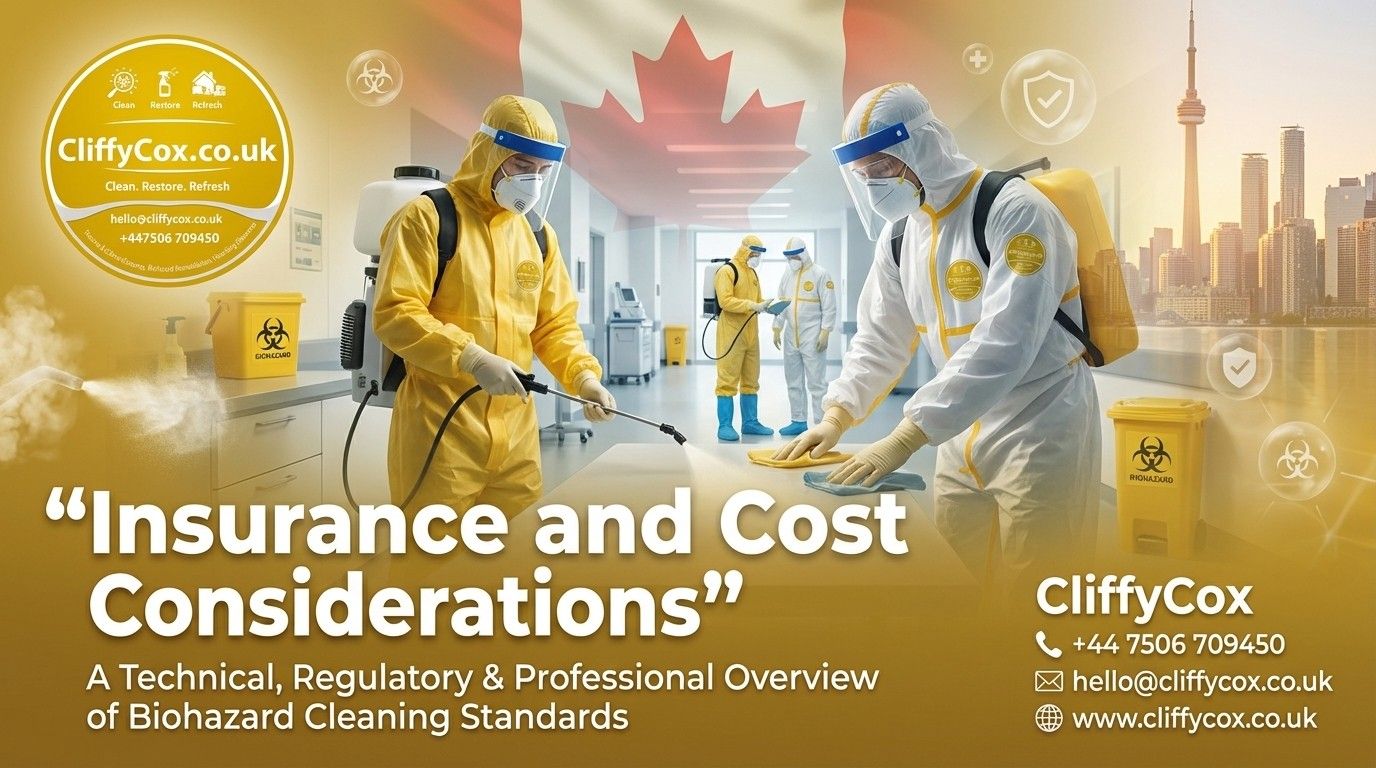
6. Insurance and Cost Considerations
Crime scene cleaning costs in Canada vary significantly depending on:
Size of the affected area
Severity of contamination
Structural damage
Time on site
Emergency response requirements
In many cases, homeowner or commercial insurance policies may cover biohazard cleanup, particularly when associated with sudden or accidental events.and you can call on +44 7506 709450
7. Ethical and Emotional Responsibility
Crime scene cleaners regularly work in environments tied to loss and trauma. Professional operators understand the importance of:
Discretion
Compassionate communication
Respect for families and property
Unmarked vehicles when requested
This human element is as important as technical expertise.
8. Recommended Biohazard & Crime Scene Cleaning Companies in Canada
The following companies are professionally recognised, experienced, and established in the Canadian biohazard cleaning sector. Descriptions below are original summaries, not sourced from external material.
Specialist Hygiene Services is a trusted and well-established provider in Canada, supporting individuals, families, landlords, and businesses during some of life’s most difficult situations. They offer professional crime scene cleaning and trauma cleanup services for both residential and commercial properties, helping restore spaces that have been affected by serious incidents.
Their services include unattended death cleaning, suicide cleanup, hoarding clean-ups, squatters cleaning, pest infestation remediation, sewage contamination cleanup, biohazard cleaning, and responsible waste removal. Each situation is handled with care, discretion, and respect for the people involved.
The team at Specialist Hygiene Services understands that these environments can be overwhelming and emotionally challenging. That’s why they focus not only on thorough and safe cleaning, but also on clear communication, quick response times, and full compliance with health and safety regulations. They also assist with insurance paperwork when needed, helping reduce stress during an already difficult time. Their goal is simple: to make spaces safe again and help people move forward.
9. When Professional Crime Scene Cleaning Is Essential
Professional intervention is required when:
Blood or bodily fluids are present
There is risk of pathogen exposure
Structural materials are contaminated
Odours persist after basic cleaning
Legal or insurance documentation is needed
Attempting to clean such scenes without training or equipment exposes individuals to serious health and legal risks.
Professional Cleaning & Decontamination Support
If a property requires specialist cleaning, the experienced team at Cliffy Cox can help restore a safe and hygienic environment.
We provide professional
Biohazard Cleaning Services,
sensitive and discreet
Trauma Cleaning Services,
and full property support through our
Hoarders Cleaning Services.
Our trained technicians use safe methods and professional equipment to return your property to a clean and manageable condition.
Conclusion
Crime scene cleaning services in Canada represent a highly specialised field requiring technical expertise, regulatory knowledge, and ethical responsibility. These professionals protect public health by eliminating invisible biological hazards and restoring spaces to a safe condition. Choosing a qualified, experienced biohazard cleaning company ensures compliance, safety, and peace of mind during some of life’s most difficult moments.